Building Your First Investment Portfolio: A Step-by-Step Guide
Building an investment portfolio sounds intimidating — until you realize it's just five decisions. This guide walks you through each one, from zero to a working portfolio, in a single afternoon.
The 5-Step Framework
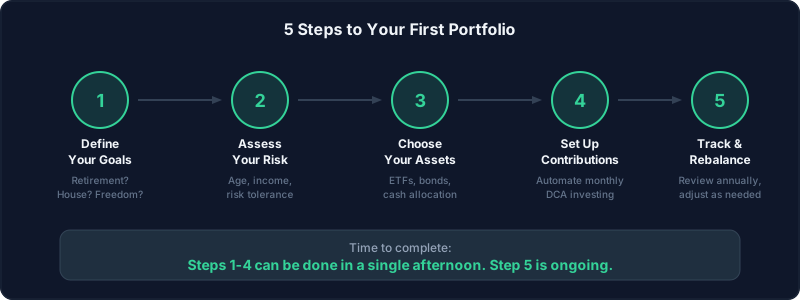
That's it. Five steps. Let's walk through each one.
Step 1: Define Your Goals
Before choosing any investment, answer one question: what is this money for?
Your goal determines everything — how much risk you can take, what assets to choose, and how long to invest.
| Goal | Time Horizon | Risk Level | Suggested Approach |
|---|---|---|---|
| Retirement | 20-40 years | High (you have time to recover) | 80%+ stocks/ETFs |
| House deposit | 5-10 years | Medium | 60% stocks, 30% bonds |
| Emergency fund | Ongoing | Very low | Cash / money market |
| Financial freedom | 15-25 years | Medium-high | 70% stocks, 20% bonds, 10% cash |
No goal = no strategy. Without a target, you'll panic at every dip and celebrate at every peak — both of which lead to bad decisions.
Step 2: Assess Your Risk Tolerance
Risk tolerance isn't about bravery — it's about your financial situation:
- Age: Younger = more time to recover from crashes = can take more risk
- Income stability: Steady salary = can afford more volatility. Freelance income = keep more in cash
- Existing savings: If you have 6 months of expenses saved, you can invest more aggressively
- Emotional response: If a 20% portfolio drop would make you sell everything, you need less stock exposure
Be honest. The best portfolio is one you won't abandon when things get rough.
Step 3: Choose Your Assets
For your first portfolio, keep it simple. You don't need 15 different funds. Two or three is enough:
Option A — The One-Fund Portfolio: Buy a single global stock ETF (like Vanguard FTSE All-World). Done. This gives you exposure to 3,000+ companies across 50 countries.
Option B — Two-Fund Portfolio:
- 80% Global stock ETF
- 20% Bond ETF
Option C — Three-Fund Portfolio:
- 70% Global stock ETF
- 20% Bond ETF
- 10% Cash reserve
Start with whatever feels comfortable. You can always adjust later. The worst choice is no choice.
Step 4: Set Up Recurring Contributions
This is where the magic happens. Set up a monthly automatic transfer from your bank to your brokerage, and configure automatic ETF purchases.
How much? Invest what you can afford after:
- Paying all bills and necessities
- Maintaining a 3-6 month emergency fund
- Having no high-interest debt (credit cards)
Even €50/month works. The habit of investing regularly matters more than the amount.
Step 5: Track and Rebalance
Once a year, check if your portfolio has drifted from your target allocation. If stocks had a great year, they might now be 85% of your portfolio instead of 70%. Sell some stocks and buy bonds to get back to your target.
This is called rebalancing, and it's the only maintenance your portfolio needs.
What to track:
- Total portfolio value over time
- Individual asset performance
- Projected future value based on your contributions and returns
- Whether you're on track for your goal
Common First-Portfolio Mistakes
Over-diversifying. Buying 10 different ETFs that all track similar markets. One or two broad ETFs is sufficient.
Chasing last year's winners. The best-performing fund last year is rarely the best next year. Stick with broad market exposure.
Not starting because of analysis paralysis. Reading 50 articles about the "perfect" portfolio and never opening an account. Imperfect action beats perfect inaction.
Investing without an emergency fund. If you need to sell investments during a market crash to pay rent, you'll lock in losses.
See It for Yourself
Build your portfolio in our simulator before committing real money. Add your planned assets, set your monthly contributions, and see how your portfolio could grow over your time horizon. It takes 30 seconds and costs nothing.
Ready to project your portfolio growth?
Try our free simulator — add your assets, set contributions, and see how your investments could grow.
Try the Simulator