How Compound Interest Works: The Key to Growing Your Wealth
Compound interest is often called the eighth wonder of the world — and for good reason. It's the single most powerful force in wealth building, and understanding how it works can transform the way you think about your money.
What Is Compound Interest?
At its core, compound interest means earning interest on your interest. Unlike simple interest, where you only earn returns on your original investment, compound interest applies to both your principal and all the gains you've already accumulated.
Here's the formula:
A = P × (1 + r/n)^(n×t)
Where: A = final amount, P = principal, r = annual rate, n = compounding frequency, t = years
But you don't need to memorize this. What matters is the intuition: your money grows faster and faster over time because each year's gains become part of next year's base.
A Simple Example
Let's say you invest €10,000 with an 8% annual return and never add another cent. Watch how the growth accelerates:
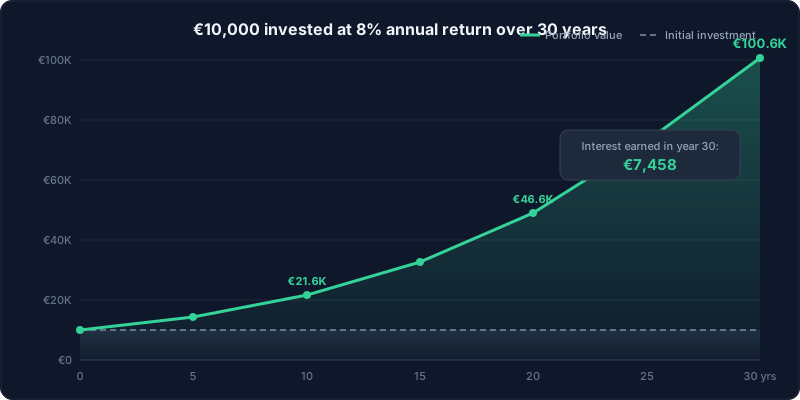
| Year | Starting Balance | Interest Earned | Ending Balance |
|---|---|---|---|
| 1 | €10,000 | €800 | €10,800 |
| 5 | €13,605 | €1,088 | €14,693 |
| 10 | €19,990 | €1,599 | €21,589 |
| 20 | €42,241 | €3,379 | €45,620 |
| 30 | €93,219 | €7,458 | €100,627 |
Notice how the interest earned in year 30 (€7,458) is nearly 10 times what you earned in year 1 (€800) — even though the rate never changed. That's the compounding effect.
Why Starting Early Matters More Than Starting Big
The most valuable asset in compound interest isn't money — it's time. Consider two investors:
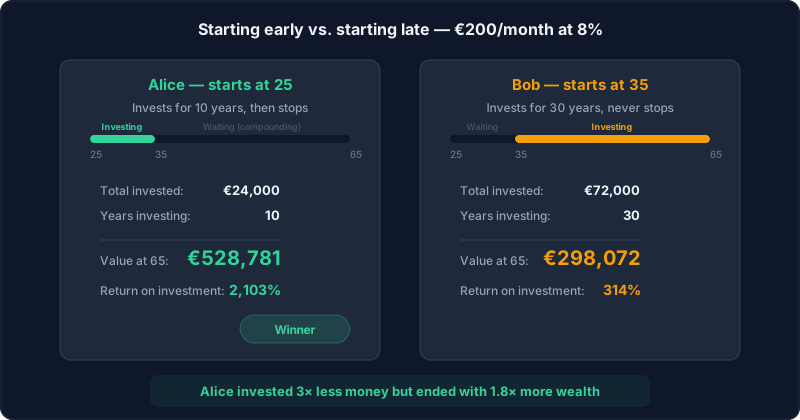
Alice invested three times less money than Bob but ended up with nearly twice the wealth. Why? Because her money had an extra decade to compound. Those first 10 years of compounding created a snowball that 30 years of contributions couldn't catch.
This is why the best time to start investing was yesterday. The second best time is today.
The Role of Regular Contributions
Compound interest becomes even more powerful when combined with regular contributions. Instead of investing a lump sum and waiting, adding even a small amount each month dramatically accelerates your growth.
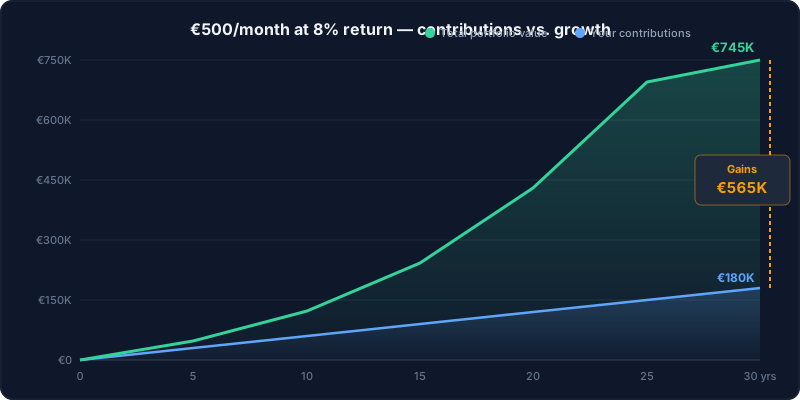
The green area shows your total portfolio value. The blue area shows what you actually put in. The gap between them — €565,180 — is pure compound interest gains. That's more than three times what you contributed.
Even starting with just €50/month grows to over €74,000 in 30 years at 8%. Don't dismiss small contributions.
Common Mistakes to Avoid
1. Waiting for the "right time" to invest. Time in the market beats timing the market. Every year you wait is a year of compounding you'll never get back.
2. Underestimating small amounts. Even €50/month grows to over €74,000 in 30 years at 8%. Don't dismiss small contributions.
3. Not accounting for inflation. A 8% nominal return with 2% inflation gives you roughly 6% real growth. Always think in real (inflation-adjusted) terms.
4. Checking your portfolio too often. Compound interest rewards patience. Daily fluctuations are noise; the long-term trend is what matters.
See It for Yourself
Numbers on a page are one thing. Watching your own portfolio projection grow year by year is another. Try our free simulator to see exactly how compound interest could work for your specific situation — set your assets, contributions, and time horizon, and watch the math do its work.
Ready to project your portfolio growth?
Try our free simulator — add your assets, set contributions, and see how your investments could grow.
Try the Simulator