ETFs vs Individual Stocks: Which Is Right for You?
One of the first decisions every investor faces: should you buy ETFs or pick individual stocks? The answer depends on your goals, your time, and your appetite for risk. Let's break it down.
What's the Difference?
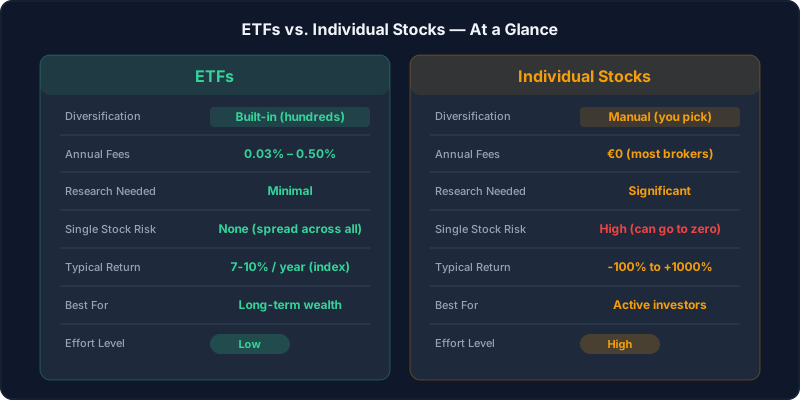
An ETF (Exchange-Traded Fund) is a basket of assets — stocks, bonds, or commodities — bundled into a single tradable security. When you buy one share of an S&P 500 ETF, you're instantly invested in 500 companies.
An individual stock is a share of a single company. When you buy Apple stock, your returns depend entirely on Apple's performance.
The Risk-Return Trade-off
This is where the difference matters most. ETFs cluster in a predictable range. Individual stocks scatter wildly — some deliver extraordinary gains, others go to zero.
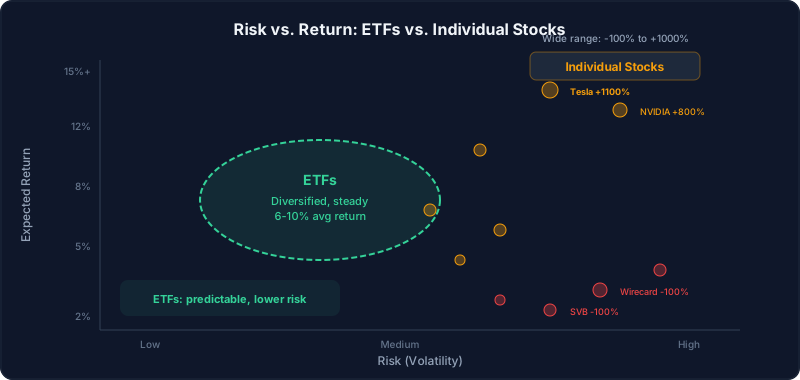
The key insight: most individual investors underperform index ETFs over the long term. Study after study shows that stock-picking, even by professionals, rarely beats the market consistently.
Over a 15-year period, roughly 90% of actively managed funds underperform their benchmark index.
— S&P Dow Jones SPIVA Report
When ETFs Make Sense
ETFs are the right choice when you:
- Want steady, long-term growth without spending hours researching companies
- Are building a retirement portfolio that compounds over decades
- Prefer low maintenance — buy regularly, rebalance annually, done
- Want instant diversification without needing €50,000+ to buy many individual stocks
- Are just starting out and want a proven strategy
A simple three-ETF portfolio (global stocks, bonds, real estate) can outperform most professional stock pickers over 20+ years.
When Individual Stocks Make Sense
Individual stocks are worth considering when you:
- Have deep knowledge of specific industries (tech, biotech, energy) and can evaluate companies
- Want more control over exactly what you own
- Can handle higher volatility without panic selling
- Have a larger portfolio where individual positions are a small percentage of total
- Treat it as a hobby and enjoy financial research
Even then, most financial advisors recommend keeping individual stock picks to no more than 10-20% of your total portfolio, with the rest in diversified index funds.
The Hybrid Approach (Best of Both Worlds)
You don't have to choose one or the other. Many successful investors use a core-satellite strategy:
- Core (80-90%): Broad market ETFs for stable, diversified growth
- Satellite (10-20%): Individual stock picks in companies you believe in
This gives you the reliability of index investing with the upside potential of stock picking — without putting your entire portfolio at risk.
What About Fees?
ETFs charge a small annual fee (expense ratio), typically 0.03% to 0.50%. On a €10,000 investment, that's €3 to €50 per year — negligible compared to the diversification benefit.
Individual stocks have no ongoing fees, but you pay trading commissions and, more importantly, the hidden cost of your time researching, monitoring, and deciding when to buy and sell.
See It for Yourself
Whether you're building an ETF-only portfolio or mixing in individual stocks, the key is projecting your growth over time. Set up different scenarios in our simulator — compare a single ETF strategy against a multi-stock approach and see how they perform over 5, 10, or 30 years.
Ready to project your portfolio growth?
Try our free simulator — add your assets, set contributions, and see how your investments could grow.
Try the Simulator