How to Start Investing with €100 per Month
The most common excuse for not investing is "I don't have enough money." But here's the truth: €100 per month is all you need to build serious wealth. The only thing that matters more than the amount is starting now.
What €100/Month Becomes
Let's put the numbers on the table. At an 8% average annual return — which is roughly what global stock markets have delivered historically — your €100/month turns into:
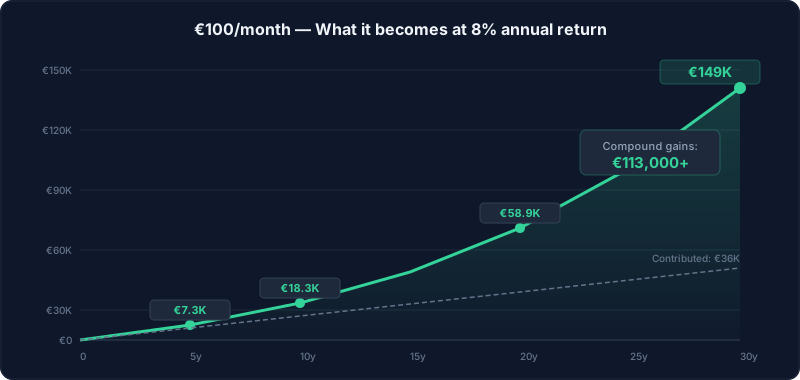
You contribute only €36,000 over 30 years. Compound interest generates over €113,000 in pure gains. That's the power of consistency over time.
Even over shorter periods:
| Time Invested | Total Contributed | Portfolio Value | Gains |
|---|---|---|---|
| 5 years | €6,000 | €7,348 | €1,348 |
| 10 years | €12,000 | €18,295 | €6,295 |
| 20 years | €24,000 | €58,902 | €34,902 |
| 30 years | €36,000 | €149,036 | €113,036 |
A Simple Starter Portfolio
You don't need to be a financial expert. With €100/month, here's a straightforward three-fund approach:
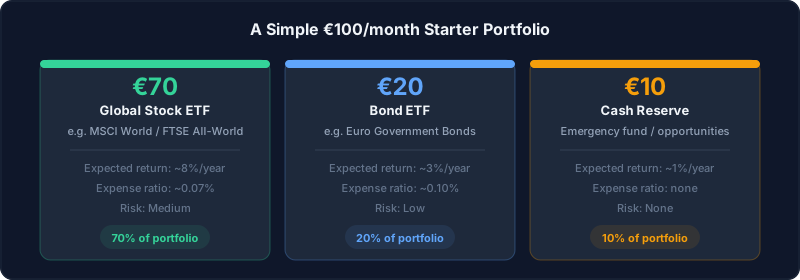
This gives you global stock exposure for growth, bonds for stability, and a small cash buffer. As your income grows and you can invest more, you can adjust the allocation — but this starting point is solid.
Step-by-Step: Getting Started This Week
Step 1: Open a brokerage account. Look for one with no minimum deposit, low or zero trading fees, and access to ETFs. European options include Trade Republic, Scalable Capital, or DEGIRO.
Step 2: Set up automatic monthly transfers. Move €100 from your bank to your brokerage on the 1st of each month. Make it automatic so you don't have to think about it.
Step 3: Buy one global ETF. Start with a single broad-market ETF (like Vanguard FTSE All-World or iShares MSCI World). Don't overcomplicate it. One fund gives you instant diversification across thousands of companies.
Step 4: Forget about it. Seriously. Don't check daily. Set a calendar reminder to review quarterly. Your job is to keep contributing, not to watch charts.
"But I Can't Afford €100"
Then start with €50. Or €25. The amount matters less than the habit. Once you prove to yourself that you can invest consistently, you'll naturally find ways to increase the amount:
- Cancel one unused subscription: +€10-15/month
- Cook one more meal at home per week: +€30-40/month
- Redirect a raise or bonus directly to investments
The hardest part isn't finding the money — it's making the first transfer. Once that's done, momentum takes over.
What NOT to Do
Don't wait until you "know enough." You'll never feel ready. Start with a single ETF and learn as you go.
Don't try to time the market. You'll get it wrong. Monthly auto-investing removes this temptation entirely.
Don't invest money you'll need within 2 years. Keep an emergency fund separate. Investing is for money you won't touch for 5+ years.
Don't pick individual stocks with your first €100. A single stock is a concentrated bet. An ETF gives you hundreds of stocks in one purchase.
See It for Yourself
Model your own €100/month (or any amount) scenario in our simulator. Set your monthly contribution, pick a time horizon, and see exactly where you'll be in 5, 10, or 30 years. The math doesn't lie — the best time to start is now.
Ready to project your portfolio growth?
Try our free simulator — add your assets, set contributions, and see how your investments could grow.
Try the Simulator